Showing posts with label healthy eating. Show all posts

Healthy Eating - Five Healthy Foods To Eat Before Bed and Prevent Weight Gain

Wondering what you can snack on before turning into bed for the night? If you are like most people, you have heard snacking before bed is a big no-no if you want to keep your weight in check. But is this the case? Provided you are snacking on the proper foods, and including these as part of your overall daily calorie intake, you can certainly add them to your eating plan without concern.

Let's look at five different smart snack options for the pre-bed period...

1. Cottage Cheese. Cottage cheese is a perfect pre-bed snack as it is a form of casein protein, which means it is slow to be digested in your body. At 100 calories per half-cup serving, it is also an easy one to work into your total daily calorie target.

Serve it with a few nuts or a couple of grapes.
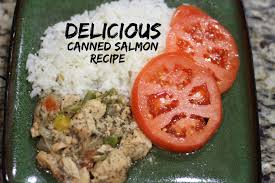
Résultat de recherche d'images pour "Canned Salmon."2. Canned Salmon. Canned salmon is the next ideal pre-bed snack to use on a regular basis. All you need to do here is open up the can, and it is ready to go. The great thing about salmon is it's a rich source of protein as well as a terrific source of healthy fats. Both of these are perfect for keeping your body as lean as possible.

With no carb count, it will also keep your blood sugar levels stable. Mix with egg white and prepare a salmon patty if desired.

3. Nut Butter. Nut butter, whether eaten alone or with celery, for example, is another good choice before bed. You do need to watch how much you eat here (too much nut butter will add up quickly!), but it is a source of healthy fats, protein, as well as some dietary fiber.

A tablespoon or two can be an excellent way to end your day.

4. Oatmeal. If you have had a relatively active day, do not shy away from adding oatmeal to your eating plan. Eating carbs, as long as they are slow digesting carbs before bed can be permitted.

Choose steel-cut oats or plain oats if steel-cut oats are not available and make sure you are not adding massive amounts of sugar to the bowl. Flavor with some cinnamon or nuts instead.

5. Raw Vegetables With Guacamole. Finally, consider guacamole as a perfect pre-bed snack along with diced vegetables. Vegetables are low in calories, high in fiber and are an ideal choice for those seeking bodyweight control. And, the guacamole is going to provide healthy fats along with the protein your body needs to keep your hunger in check for the overnight fast ahead.

There you have a few great pre-bed snacks to fuel your body without causing weight gain. Don't fear to eat before bed; just be smart how you go about it.

Although managing your disease can be very challenging, Type 2 diabetes is not a condition you must just live with. You can make simple changes to your daily routine and lower both your weight and your blood sugar levels. Hang in there, the longer you do it, the easier it gets.

For nearly 25 years, Beverleigh Piepers has searched for and found a number of secrets to help you build a healthy body. Go to http://DrugFreeType2Diabetes.com to learn about some of those secrets.

The answer isn't in the endless volumes of available information but in yourself.

Article Source: http://EzineArticles.com/expert/Beverleigh_H_Piepers/123142


Reclaiming Yourself - 3 Healthy Changes You Must Make

Abandoning yourself for different things can leave you in a state of meaninglessness. The same are the results when you choose to work with a false-self system where you edit your thoughts and rehearse emotions and perform according to what you feel others expect from you. Hiding your true self or forgetting who you are will leave you more or a robot than a human and nothing good can come out of such a state.

When you want to live your life to the fullest, achieve your dreams and be happy, you must be willing to reclaim yourself from the shadow you have become. And just like most changes, it is not that hard to start making a difference in your life. To bounce back to a life that focuses more on who you are, what you want and where you wish to be, there are three areas in life that you should start focusing more on.
نتيجة بحث الصور عن ‪Healthy thinking‬‏
Healthy thinking

Healthy thinking starts by understanding that you are worth so much more than you initially thought. When you love the person you are, there is really nothing that can stop you from achieving your full potential and remaining happy while at it. Appreciate your flaws and weaknesses and improve on those that you can. Let your thoughts always incline on positivity over negativity and you will have an easy way handling even the toughest times in your life. Healthy thinking also entails stopping to worry about what people think about you and fading of the thoughts that people are always judging you and taking everything that happens to you personally. Concentrate your thoughts on what makes you happy and the goals you want to achieve and you will start matching towards personal fulfillment.

Healthy eating

What you eat determines your appearance, moods and how strong you are to fight infections and diseases that would otherwise steal off the value of your life. To reclaim yourself, therefore you should also take action towards eating healthy. This way, you will be able to maintain a body you are proud of and happy with, remain active and happy and ward off diseases and infections. If you have been worried about your weight, then it should be time to start making healthy eating choices. Eating balanced, what the body needs and just enough is the key to better health and a better you for that matter.

Healthy living

نتيجة بحث الصور عن ‪Healthy living‬‏Healthy living touches on so many areas of life from relationships to habits. Drop unhealthy relationships or relationships that drain you and create beneficial ones when you are ready. It is also a very good idea to adopt an exercise program to maintain good health and keep your good moods and energy levels up to get things done. You will also need to have regular health checks, balance your work and leisure as well as drop bad habits that only rob you value of life. In general, you should strive to be a better person than you are to start living healthy.

Life is largely dependent on the choices you make and how you work towards achieving goals you have. You need to start somewhere, start by reclaiming yourself today.

Article Source: http://EzineArticles.com/expert/Freda_Marshall/2320651


Why Eat Wholefoods?

In recent times I've come to a greater appreciation of the health benefits of wholefoods to nationalise my body.

This article is not dedicated to extolling the virtues of any one diet over another. Many of those articles are sprawled across the internet and in my opinion are about as confusing as a child making sense of road map. It's no lie that consumers are inundated with too much information these days. Despite this, global populations continue to battle the bulge with very little end in sight.

Why eat wholefoods?
You cannot deceive your genetic constitution. Like every get-rich-quick scheme that finds its way into the market place, there's a similarly shady entrepreneur lurking behind the scenes waiting to capitalise on people's misfortunes. It doesn't have to be that way.

The point of this article is to help you make an informed decision as it relates to sound nutrition. I will discuss two points in favour of wholefoods. The second point reasons against consuming packaged foods. It is worth noting the added health benefits of organic health foods, though I prefer to address that in a future article.

I render a caveat at this point insisting that you don't take my word for it and conduct your due diligence. Research my statements and furthermore put them to the test. Live and breathe them for three months or more to see if they resonate with your physical wellbeing. The proof is always in the pudding.

1. Food Should Be Consumed As Close to Nature As Possible

As surprising as this statement may sound, your genes are not equipped to handle the level of manufacturing and processing that many modern foods undergo these days. Here's an analogy to illustrate my point. Would you feed your pet/s the same foods you consume day in day out? I have used this line of questioning with audiences to discover the shock and horror of such a proposition.

Yet these same people have no issue consuming convenience foods that are about as rich in nutrients as a cardboard box!

Albeit, our genetic makeup is somewhat different to the animal kingdom, yet in many ways we still retain much of the same structural similarities, i.e. digestive systems which process food, thus turning it into energy and nutrients for vital bodily functions.

Eating as close to nature as possible means leaning toward foods that have had little H.I. (Human Interference) as possible. These days' manufacturers add a host of additives to food in order to make it marketable and palatable to consumers. These include; additives, colours, flavours, enhancers, bulking agents preservatives, fortifying agents and more. Commercial food has become big business, as evident via social media and television ads. We are being sold to at the expense of our health, increasing waistline and hard earned dollars.

As you make a shift toward wholefoods, you'll begin to realise the immediate health benefits which include; increased energy, an end to brain fog, clearer skin, improved cognitive function, enhanced and stable moods and emotions, a leaner fitter and improved overall physique. There are much more advantages to list beyond the scope of this article.

2. Packaged Foods Are Convenience Foods

There's a story about Oprah Winfrey inviting Dr Phil to visit her at her home one weekend (via private jet) at a moment's notice. It turns out she was having a gathering of her closest female friends and the topic invariably turned to weight loss. Interested to discover the psychological truths, she summoned Dr Phil to explain why she continually battled the bulge for much of her life.

His answer surprised Oprah and her guests - "You are overweight because you choose to be," he said. He proposed that every time Oprah was busy and had little time to cook or prepare a healthy meal, she chose to defer her health by trading it for CONVENIENCE.

Whether she was aware of it, she valued convenience and time which had worked against her in the long run. Her story is one that is all too familiar for many of us. In our haste to manage life, we trade convenience and time for our health by making poor lifestyle and food choices. We hold steadfast that doing so won't hurt since there is always tomorrow to right the wrongs of yesterday.

As you know, tomorrow is that elusive place that never arrives as we plan for, since life has a way of derailing our best intentions. Therefore every time you choose a convenience food you are sending two messages to your mind and body. The first is directed to your brain which equates convenience to taking shortcuts. Naturally your subconscious mind associates this behaviour as a learned program over time. It becomes increasingly challenging in the future to navigate your way out of this conflicting habit.

The second message is communicated to your body via the lack of essential vitamins, nutrients and minerals required for vital bodily functions. Convenience foods lack all these qualities even if they are fortified with vitamins during the manufacturing process. Your DNA is not equipped to breakdown and assimilate the preservatives and additives I mentioned earlier. Therefor your body's energy is devoted to processing such additives in order to draw whatever nutrients are left in the food.

Over time if the body is repeatedly exposed to convenience foods, it becomes nothing more than a junk processing factory. Healthy bodies on the other hand become efficient at assimilating nutrients and utilising them accordingly. That's why healthier people look and feel younger than those who consume convenience foods. Their cells have become accustomed to quality nutrients. It's for this same reason that healthy bodies cannot tolerate convenience foods and will expel them from the body as quick as possible. I often wonder what it would be like to feed a person from a primitive tribe like the Masai warriors convenience foods for a day. A dare say they would become equally sick and lack energy, given their cultural preference for traditional and wholefoods.

If you enjoyed this article by Tony Fahkry, why not gain access to Tony's full body of knowledge by getting a copy of his new book 'The Power to Navigate Life'

The Power to Navigate Life is arguably the most complete and powerful teachings on the mastering of life. The Power to Navigate Life is your opportunity to experience a rewarding life from the very first page. Visit http://www.tonyfahkry.com to get your copy.

Article Source: http://EzineArticles.com/expert/Tony_Fahkry/837610


Here's How Sushi Makes You Fat

Almost everyone loves sushi. After all, what's not to love? It comes in all varieties and all colors, and those bite-size pieces are so cute, right? And who doesn't think a sushi hand roll in the shape of a 'cone' isn't healthier than an ice-cream cone, right? Well... uh... not exactly.

Sushi has a reputation as a healthy low-fat meal option, but if you're not eating it the right way, there ain't nothin' low-fat about it! Depending on what you order, your sushi meal can be an absolute disaster. Certain rolls can have upwards of 500 to 1,000 calories. So, let me give you some facts and figures.

SOME FACTS

1. Sushi (fish on top of rice) - Average portion of fish used for 1 piece =.5 oz.

2. Sashimi (fish without rice) - Average portion of fish used for 1 piece 1 oz.

3. Sushi is made with more fish than rice. Sushi rolls are made with less fish and more rice; and poorer cuts of high-quality whole fish. (You don't think they'd throw away those poorer cuts, the ones not used for sushi or sashimi, do you? In other words, what would otherwise be discarded is used for the sushi rolls.)
sushi
4. Sushi restaurants use short-grain rice, and most people have it with white rice (which digests quickly and causes a spike in blood sugar). The shorter the grain, the quicker to cook. They cook it longer to make it stickier (for the obvious reason). The sticker it is, the more starch (sugar) released. But, they don't stop there. Rice vinegar is added to make it even stickier; and sugar plus wine, sake or sweet brandy is added to make it sweeter (that's how 'plain ole' white rice at the sushi restaurant tastes so good). There's also a bit of salt added as well.

SOME FIGURES

These calories are a conservative (emphasis on the word 'conservative') average. As with any hand-crafted food, calories in sushi, sashimi and rolls will vary in their sizes/weights and the content amount of condiments (i.e., rice vinegar, sugar, sesame seeds, tempura flakes, mayo, sweet sauce, chili sauce), fish and rice.

1. 1 TBS cooked sushi rice (per 1 piece of sushi) = 25 calories. 1 piece of sushi = 60 calories. 1 piece of sashimi = 40 calories. 1 piece of a 6-piece roll = 35 calories.

2. A typical sushi roll is cut into 6 pieces, with rice inside or out. There is one tablespoon of sugar for each cup of cooked sushi rice, and each sushi roll contains about one cup of white rice in it. So, the rice in one roll alone contains 240 calories-BEFORE the fish is added! And, of course, most people will have more than one roll as their meal.

3. "Spicy" rolls are comprised of the less-grade fish mixed with chili sauce and mayonnaise, which adds fat and as many as 100 additional calories to each roll. Then, there are the rolls with tempura, tempura flakes, cream cheese, chili sauce and sweet sauce. ALL of this adds LOTS AND LOTS of calories before the fish is added.

4. Here are just some of the popular rolls that you'll find in your local sushi restaurants. (These use standard portion sizes of each ingredient in a standard 6-piece roll, and the nutrition facts for each ingredient.)(1)

Alaska Roll - 279 cal, 7 gr fat (Avocado, cucumber, crab, salmon, tobiko)
California Roll - 281 cal, 9 gr fat (Avocado, cucumber, crab, tobiko)
Dragon Roll - 382 cal, 18 gr fat (Avocado, crab, cucumber, eel)
Eel Avocado Roll - 352 cal, 16 gr fat (Eel, avocado)
Philadelphia Roll - 338 cal, 18 gr fat (Cream cheese, cucumber, raw or smoked salmon)
Rainbow Roll - 380 cal, 16 gr fat (Avocado, cucumber, crab, tobiko, sashimi, usually tuna, salmon, yellowtail)
Shrimp Tempura Roll - 381 cal, 231 gr fat (Avocado, cucumber, mayo, shrimp, tempura)
Spicy Tuna Roll - 323 cal, 15 gr fat (Tuna, chili sauce, mayo)
Spider Roll - 398 cal, 22 gr fat (Avocado, cucumber, fried soft shell crab, lettuce, roe, spicy mayo)
Tiger Roll - 360 cal, 20 gr fat (Avocado, cucumber, shrimp tempura)
SOME ADVICE

1. Get your rolls with rice on the inside OR outside only, not both.

2. For the lowest calorie options, choose tuna, yellow tail, shrimp or salmon.

3. Don't think one roll is enough? Start with a mixed green salad with the ginger dressing on the side. Or, better yet, have one or two cups of a simple mixed green salad or chopped veggie salad at home about 30 minutes before heading to the restaurant. Would a cup of miso soup as a starter kill you? No, but the average cup (including the tofu and onion or scallion) has between 80 and 100 calories and lots and lots of sodium).

4. If you must have two rolls, make the second one a vegetable roll.

5. Sashimi is best because it's literally just the meat of the fish without any rice or extra ingredients.

6. Is brown rice better than white rice with sushi? Well, it does have a little more fiber, but then again, it's going to be cooked soft and sticky just as the white. So, six of one, half-dozen of the other. You decide.

7. Beware of soy sauce. 1 TBS of Kikkoman "Lite" Soy Sauce = 10 calories + 575 mg. sodium!! (1 TBS of regular Kikkoman Soy Sauce = 10 calories + 920 mg. sodium!!) Avoid using it, but if it's absolutely necessary, use the "Lite" and use it sparingly. Even then, try watering it down or squeezing some lemon juice in it. And, don't forget: Drink lots and lots and lots of water!

8. Avoid Seaweed Salad. The green seaweed salad you get at a sushi restaurant is NOT health food! While its main ingredient (wakame) does have calcium, iron, niacin and thiamine, other ingredients dilute the salad's nutritional profile while enhancing its taste: agar, sesame oil, cloud ear mushrooms, sesame seeds, distilled vinegar, high-fructose corn syrup, sugar, salt, red pepper flakes, kelp extract and yellow and blue food coloring. A serving of approximately 3 oz. has 100 calories, 5 grams of fat, 11 grams of sugar, and a whopping 1,200 mg. of sodium! The black seaweed salad (called Hijiki) is no better. Just 3 oz. of the "unfinished" product (what the restaurant buys) is slightly under 100 calories and 672 mg. of sodium and that's before a restaurant enhances it its way, including sweetening it up!

When it comes right down to it, when you remove all the Americanized 'bells and whistles'--the sauces, the cream cheese, the crunchy flakes--let's remember that sushi is a Japanese-style FISH-FOCUSED meal. So, FOCUS ON THE FISH... and not on all the stuff that makes you fat.

_________________________________________________________

(1) See: How To Track Macros And Calories In Sushi

I am passionate about helping my clients become slim and healthy. I publish a weekly blog and podcast to educate and motivate on all issues related to #weightloss, #obesity, health and wellness, diet and lifestyle change.

Visit me at http://www.weightnomoredietcenter.com.

Article Source: http://EzineArticles.com/expert/Lori_Boxer/2169327